
What Is Super Sack Debagging? How Bulk Material Handling Supports Manufacturers
For companies handling plastic resins, powders, pellets, and other raw materials, it's an important part of bulk material handling that can reduce unnecessary labor, protect product quality, and keep production moving.
A plastics manufacturer receives a large shipment of resin, but there's a problem. The materials have arrived in oversized industrial bags, and the production equipment requires a completely different packaging format. Now employees have to figure out how to unload, transfer, and prepare everything before manufacturing can even begin.
It's a frustrating situation, especially when production schedules are already tight.
Super sack debagging solves this problem by transferring dry bulk materials from large industrial bags into containers or equipment better suited for storage, manufacturing, or distribution. For companies handling plastic resins, powders, pellets, and other raw materials, it's an important part of bulk material handling that can reduce unnecessary labor, protect product quality, and keep production moving.
What Is Super Sack Debagging?
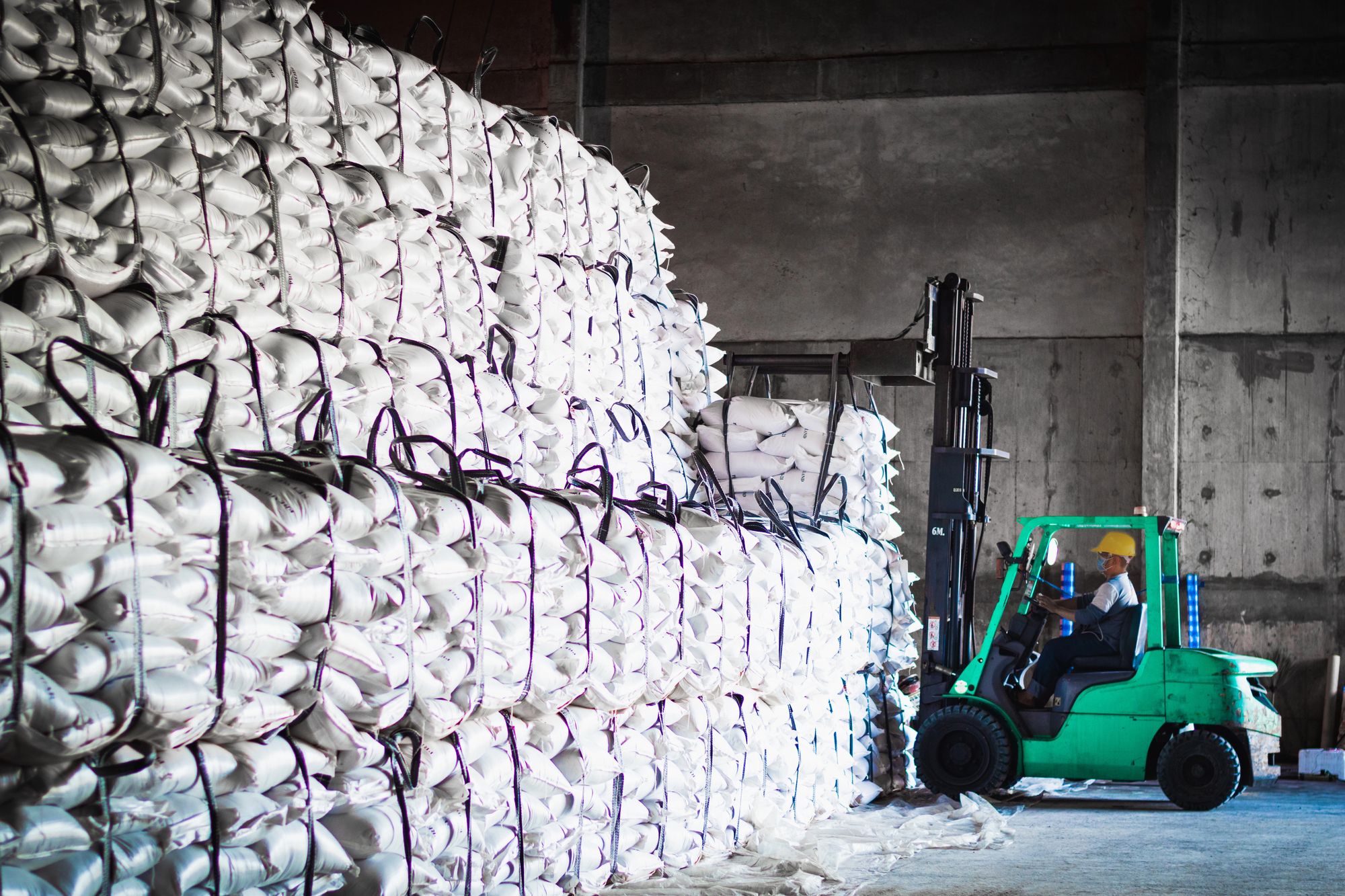
Super sack debagging is the process of emptying large industrial bulk bags, commonly known as super sacks or Flexible Intermediate Bulk Containers (FIBCs), and transferring their contents into another container, storage system, or processing equipment.
These heavy-duty woven bags are designed to transport substantial quantities of dry materials. They're commonly used in industries such as plastics, chemicals, agriculture, and construction because they allow businesses to ship bulk products without dividing everything into hundreds of smaller packages.
The challenge comes when those materials reach their destination.
A plastics manufacturer might receive resin pellets in super sacks but need the pellets transferred into Gaylord containers for storage. Another facility might require smaller quantities to accommodate individual production runs.
Debagging allows manufacturers to receive materials in one format and prepare them for use in another, without having to change how their suppliers package shipments.
How Does the Super Sack Debagging Process Work?
The exact process depends on the material, bag design, and intended destination. However, proper preparation is just as important as the actual unloading.
First, the incoming shipment must be identified and inspected. Warehouse personnel verify the material, check the packaging for damage, and review any handling instructions. This helps prevent the wrong material from entering a production batch and identifies potential contamination concerns before the bag is opened.
Next comes the physical transfer. Depending on the material and equipment available, super sacks may be positioned above a receiving container or unloading system. Material is then discharged through an appropriate opening and transferred into its next packaging format.
Some products flow easily, while others require additional care. Fine powders, for example, can create dust during handling. Certain plastics are sensitive to moisture, making storage conditions and packaging integrity especially important.
Once the transfer is complete, the materials can be repackaged, labeled, stored, or prepared for delivery. Accurate inventory records help manufacturers keep track of what was received, how much material was transferred, and where it needs to go next.
Why Is Bulk Material Handling Important for Manufacturers?
Manufacturing depends on having the right materials available at the right time. But receiving a shipment doesn't automatically mean those materials are ready for production.
Poorly coordinated bulk handling can create extra work, occupy valuable warehouse space, and introduce preventable delays.
Consider a plastics manufacturer receiving several truckloads of resin each week. If employees must repeatedly move super sacks, empty them manually, and prepare materials for processing, those tasks can consume hours that could otherwise be spent supporting production.
Outsourcing that work to a logistics partner can help reduce the handling burden at the manufacturing facility.
There is also the issue of material loss. Spilled plastic pellets, damaged packaging, or contamination during transfers can create unnecessary waste and cleanup costs. Appropriate handling equipment and procedures help reduce exposure to these problems.
For manufacturers dealing with multiple materials or product grades, organization becomes even more important. Mixing different resins or losing track of batch information can lead to quality concerns that extend well beyond the warehouse.
These challenges explain why specialized plastics logistics services are valuable for companies managing high-volume raw materials.
How Does Super Sack Debagging Support Inventory Management?
Debagging is often one part of a larger inventory management strategy.
Manufacturers frequently purchase raw materials in bulk to accommodate production schedules or supplier requirements. However, those materials may not be needed immediately.
Instead of transferring an entire shipment directly to the manufacturing facility, a business can use an off-site warehouse to receive and store its inventory. Materials can then be prepared in the appropriate packaging format and delivered according to production demand.
This approach is particularly useful for businesses with limited storage space or fluctuating material requirements.
Lake Park Logistics offers bulk storage services in Atlanta, GA, allowing manufacturers to manage larger quantities of inventory without keeping everything at their production facilities.
For a closer look at the advantages of storing high-volume inventory, read our article on what bulk storage is and when businesses should use it.
Can Super Sack Debagging Help Manufacturers Scale Production?
Growth creates some interesting logistical problems. A company may have the customers, equipment, and employees needed to increase production, only to discover that its existing warehouse can no longer accommodate the volume of incoming materials.
Adding another production line doesn't automatically create more room for raw material storage.
Debagging and bulk packaging services can help manufacturers manage changing volumes without taking on every material-handling task internally.
For example, a facility expanding its plastics production might arrange for a third-party warehouse to receive incoming resin shipments, handle necessary packaging conversions, and coordinate deliveries as materials are needed.
This keeps additional inventory from overwhelming the manufacturing floor while providing greater flexibility as production requirements change.
Our article on using a 3PL during a plant expansion explores how outside warehousing and logistics support can help businesses manage these growing pains.
Bringing Bulk Handling, Warehousing, and Transportation Together
One advantage of working with a third-party logistics provider is the ability to coordinate multiple stages of the supply chain through a single partner.
A manufacturer importing raw plastic materials, for example, may need transportation from the port, temporary storage, bulk packaging conversions, and scheduled deliveries to its production facility.
Handling each service independently can introduce additional coordination, particularly when shipment volumes or delivery schedules change.
For companies receiving freight through the Southeast, combining 3PL logistics services with material handling can create a more organized process from initial receipt to final delivery.
Depending on how materials arrive, rail-to-truck transloading may also play a role in moving bulk freight into regional storage and distribution networks.
The goal is to make sure raw materials arrive in the correct quantities, packaging, and condition without creating more work for the manufacturer.
Frequently Asked Questions About Super Sack Debagging
1. What types of materials can be handled through super sack debagging?
Super sack debagging is commonly used for dry bulk materials such as plastic resin pellets, granules, powders, seeds, and certain industrial ingredients. The appropriate handling method depends on material characteristics, safety considerations, and packaging requirements.
2. Is super sack debagging the same as repackaging?
Not exactly. Debagging involves removing material from a bulk bag, while repackaging involves placing it into a new container or packaging format. The two processes often work together when manufacturers need to convert bulk shipments into smaller or alternative packaging.
3. Should manufacturers outsource bulk material handling?
Outsourcing can make sense when material-handling tasks are consuming too much production time, specialized equipment is needed, or available warehouse space is becoming limited. Manufacturers should compare the cost of internal handling with the storage, labor, transportation, and packaging services available through a qualified logistics partner.
Simplify Bulk Material Handling With Lake Park Logistics
A shipment of raw materials shouldn't create an entirely new set of problems once it reaches the warehouse.
Lake Park Logistics provides super sack management, debagging, bulk packaging conversions, warehousing, and transportation solutions for manufacturers throughout Atlanta, GA, and the Southeast.
Need help managing high-volume raw materials or converting bulk packaging for production? Contact Lake Park Logistics to discuss your material-handling requirements and explore a customized logistics solution.
GMP Certified storage, long-term and short term storage solutions backed by cutting-edge technology for polished supply chain management.
the latest Logistics Trends
Holiday Inventory Overflow: When Atlanta Retailers Should Use Short-Term Warehousing
Cross-Dock It or Store It? How to Make the Right Decision When Freight Arrives
When Should a Manufacturer Use a 3PL During a Plant Expansion?
Customer testimonials
Don't take our word for it - see what our happy customers have to say!
"They know their stuff! We needed a reliable warehousing partner for our growing business, and they absolutely delivered. The facility is spacious, our inventory is always accounted for, and their team actually cares about keeping everything running smoothly. Seriously, best decision we made!"
"Fast, efficient, and no headaches—that’s how drayage should be, and that’s exactly what we got. They handled everything coming out of the port like pros, kept us updated the whole time, and got our freight where it needed to be without any issues. Highly recommend!"
"The Lake Park Logistics team helped our supply chain immensely with their 3PL services. They gave us real-time tracking on our shipments, which really helped us identify where to improve and cut costs. It’s like having a whole logistics department without the hassle. Five stars all the way!"
Tailored Warehousing Solutions
Get a personalized consultation and quote today!